
Step back into the golden age of Nile travel with Dahabiya Cruises Egypt. These intimate, wind-powered boats drift between Luxor and Aswan, stopping at quiet riverbanks and villages that big ships skip. Enjoy boutique cabins, attentive crew, and privately guided visits to Karnak, Luxor Temple, the Valley of the Kings, Edfu, Kom Ombo, and Philae. Perfect for couples, families, and small groups seeking charm, privacy, and unrushed days on the river.
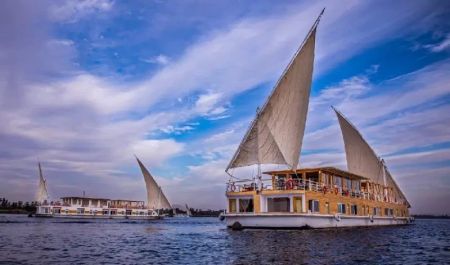
5-Day Akhnaton Dahabiya Nile Cruise from Esna to Aswan
A dahabiya is the slow way to see the Nile, and the Akhnaton is one of the most comfortable of them. Built in the old style from timber and local materials, with hand-finished cabins and fine cotton bedding, she carries only a handful of guests, which is what makes the difference: she can moor at islands and quarry sites the large cruise ships sail straight past.
This five-day sailing runs from Esna up to Aswan. You visit Edfu and Kom Ombo like every Nile cruise does, but you also stop at El-Kab, at the rock chapels of Gebel el-Silsila, and at the camel market town of Daraw — and you spend the nights anchored off quiet islands rather than tied up in a busy port. Meals are cooked on board and served on deck, and the pace is set by the wind rather than a timetable.
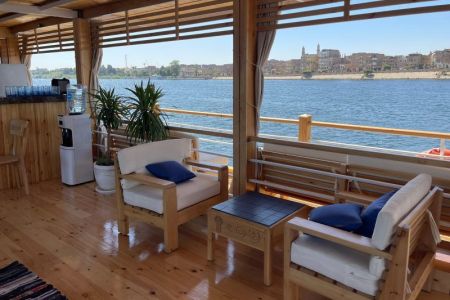
5-Day Elephantine Dahabiya Nile Cruise from Luxor to Aswan
The Elephantine is a dahabiya in the eighteenth-century manner — hand-built, timber-framed, and carrying only eleven suites, so there are never more than a couple of dozen people aboard. Panoramic windows run the length of the cabins and the wooden terraces are furnished with real Egyptian pieces rather than hotel fittings.
What the size buys you is access and quiet. The Elephantine moors at islands and villages the 150-cabin ships cannot reach, and where they raft up three deep in a working port, she ties to a bank. This five-day sailing runs Luxor to Aswan and covers the temples everyone comes for — Karnak, the Valley of the Kings, Edfu, Kom Ombo, Philae — at a pace that leaves room for a felucca ride and an afternoon in the spice market.
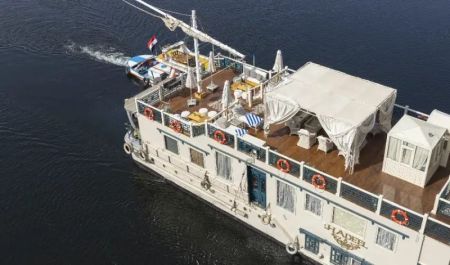
5-Day Iris Dahabiya Nile Cruise from Luxor to Aswan
The Iris is a traditional Nile boat fitted out for comfort rather than volume: classic lines, modern cabins, and few enough guests that the crew learn your name on the first afternoon. She travels at the speed the wind and the current allow, which is the point — the temples are the same ones the big ships visit, but you arrive at them without a queue.
The route runs Luxor to Aswan over five days. Karnak and Luxor Temple on the first afternoon, the Valley of the Kings and Hatshepsut on the second, Edfu and Kom Ombo from the water, and Aswan with Philae and the High Dam at the end. Meals are cooked on board and eaten on deck.
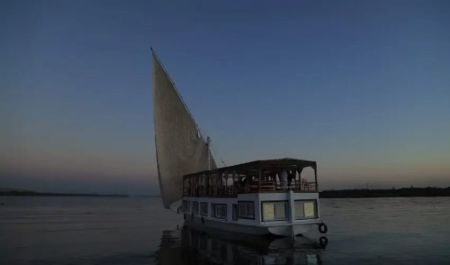
5-Day Queen Nefer Dahabiya Nile Cruise from Esna to Aswan
The Queen Nefer is a small hand-built dahabiya with a handful of cabins and a crew who cook, sail and look after a dozen or so guests at a time. There is no schedule to keep beyond the wind, no announcements, and no queue at the gangway.
Because she is small she can tie up where the large ships cannot: at Gebel el-Silsila among the old quarries, off an island at Wadi El Shat, on the bank at Maniha where the crew light a fire after dinner. The route runs Esna to Aswan over five days and takes in El Kab, Edfu, Kom Ombo and the camel market at Daraw.
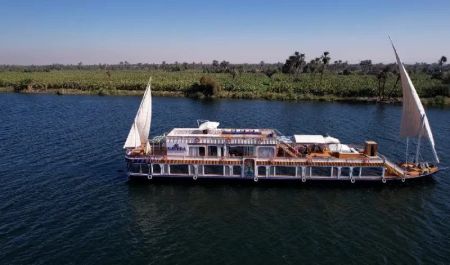
6-Day Agatha Dahabiya Nile Cruise from Esna to Aswan
The Agatha is a dahabiya built for people who would rather look at the river than at a schedule. Comfortable cabins, personal service and a large open terrace, with none of the scale of the floating hotels that work the same stretch of water.
Six days from Esna to Aswan gives room for the things a four-day cruise has to cut: the Temple of Khnum sunk below the streets of Esna, the old capital at El Kab, the quarries of Gebel el-Silsila that no large ship can reach, and a full day with nothing scheduled at all except sailing, swimming and walking the bank.
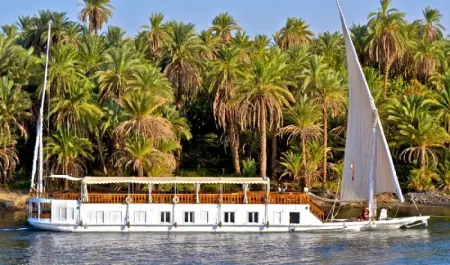
6-Day Meroe Dahabiya Nile Cruise from Esna to Aswan
The Meroe is one of the roomier dahabiyas on the river. Recently refitted, she has unusually large cabins and suites, a properly furnished saloon and a panoramic terrace big enough that you can sit apart from the other guests when you want to.
The cooking is done on board and the guiding is private, and the six-day run from Esna to Aswan is paced so that there is a whole day with nothing in it but the river. Along the way: the Temple of Khnum at Esna, the old capital at El Kab, Edfu, the rock temple and quarries at Gebel el-Silsila, and the double temple at Kom Ombo.
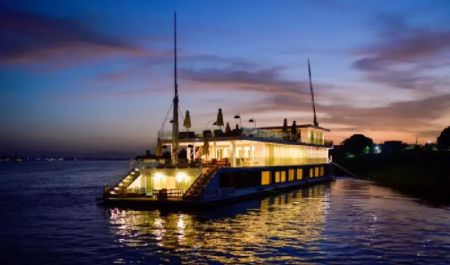
6-Day Malouka Dahabiya Nile Cruise from Esna to Aswan
The Malouka was built in 2008 with ten cabins and a limit of twenty passengers, which puts her at the larger end of the dahabiya fleet without turning her into a ship. The difference shows in the cabins and in the outdoor space: there is room to spread out on deck rather than sit shoulder to shoulder.
She sails Esna to Aswan over six days, calling at the temples of Khnum, Nekhbet at El Kab, Horus at Edfu and the double sanctuary at Kom Ombo, and mooring at Gebel el-Silsila, which only small boats can reach. One full day is left open for sailing, swimming and a walk in the desert.
ANY QUESTIONS
FREQUENTLY ASKED QUESTIONS
Get quick answers about our Egypt tours, travel packages, and destinations. Learn everything you need to plan your trip with confidence and make the most of your Egypt adventure.
Yes, you can use your phone in Egypt, but make sure it is unlocked if you plan to use a local SIM card for better rates on calls, texts, and data. Major Egyptian cities have good mobile coverage and internet access, but rural areas may have spotty service. International roaming is available but can be expensive, so purchasing a local SIM from providers like Vodafone, Orange, or Etisalat is usually more cost-effective for travelers.
Yes, you can use your phone in Egypt, but make sure it is unlocked if you plan to use a local SIM card for better rates on calls, texts, and data. Major Egyptian cities have good mobile coverage and internet access, but rural areas may have spotty service. International roaming is available but can be expensive, so purchasing a local SIM from providers like Vodafone, Orange, or Etisalat is usually more cost-effective for travelers.
Absolutely! Most reputable tour operators in Egypt offer customizable packages that let you tailor your itinerary, accommodation, and activities to match your interests and schedule. Whether you want to focus on ancient history, relaxing Nile cruises, or adventurous desert excursions, your tour can be adjusted to suit your preferences. Just let your travel agent know your priorities, and they’ll help craft the perfect experience for you.
Yes, the Pyramids of Giza are featured in nearly all tours of Cairo and Egypt, as they are the country's most iconic attraction. Most guided tours, whether group or private, include stops at the Great Pyramid, the Sphinx, and often the nearby Solar Boat Museum. It's a highlight for visitors, so you can expect it to be a central part of most itineraries.
Egypt is an excellent destination for honeymoon trips, offering a unique blend of romance, adventure, and history. Couples can enjoy breathtaking Nile cruises, explore ancient wonders like the Pyramids of Giza, and relax at luxurious Red Sea resorts in Sharm El Sheikh or Hurghada. Many hotels offer special honeymoon packages, ensuring a memorable and enchanting experience for newlyweds.
When visiting Egypt, it's best to wear lightweight, breathable clothing to stay cool in the warm climate, but also opt for modest attire, especially in rural areas and religious sites. Women should consider covering shoulders and knees, while men should avoid sleeveless tops. Comfortable walking shoes, a wide-brimmed hat, and sunglasses are also highly recommended to protect against the sun.
Whether you need a visa to travel to Egypt depends on your nationality. Most travelers, including citizens from the US, UK, EU, Australia, and Canada, need a visa, which can often be obtained online as an e-visa or upon arrival at Egyptian airports. It's always a good idea to check the latest requirements with the Egyptian consulate or official government website before your trip, as regulations can change.
Egypt is generally safe for tourists, especially in popular destinations like Cairo, Luxor, Aswan, and the Red Sea resorts. The government prioritizes tourist safety with visible security measures and checkpoints. As with any international travel, it's wise to stay aware of your surroundings, follow local advice, and keep updated on travel advisories from your home country.
Yes, it's quite popular and feasible to combine Egypt with Jordan in one trip, as both countries are geographically close and well-connected by flights. Many travelers fly from Cairo to Amman, making it easy to explore Egypt's ancient wonders and then visit Petra and the Dead Sea in Jordan. It's recommended to check visa requirements for both countries and consider booking an open-jaw ticket or a multi-country tour for seamless travel.
Yes, you can easily combine a visit to Cairo with a Nile cruise, as many travel itineraries start in Cairo to explore the Pyramids, Egyptian Museum, and other highlights before flying or taking a train to Luxor or Aswan, where the cruises depart. Most Nile cruises run between Luxor and Aswan, offering a relaxing way to see ancient temples and scenic landscapes along the river. Tour operators often arrange seamless connections, making this combination a popular and convenient choice for travelers to Egypt.
The best time to visit Egypt is from October to April when temperatures are milder and more comfortable for exploring the country's famous sites. During these months, you'll enjoy pleasant weather for sightseeing along the Nile, visiting the pyramids, and experiencing bustling cities like Cairo. Peak tourist season is typically December to February, so for fewer crowds, consider traveling in the shoulder months of October-November or March-April. Summer months can be extremely hot, especially in southern Egypt.
The must-see places in Egypt include the iconic Pyramids of Giza and the Sphinx near Cairo, the magnificent temples and tombs of Luxor and the Valley of the Kings, and the bustling markets and historic mosques in Cairo’s old city. Don’t miss a cruise along the Nile River, the ancient temples of Abu Simbel near Aswan, and the stunning beaches and coral reefs of the Red Sea in resorts like Sharm El Sheikh or Hurghada. Each destination offers a unique window into Egypt’s rich history and vibrant culture.
For a well-rounded trip to Egypt, most travelers find that 7 to 10 days is ideal. This allows you to explore the highlights like Cairo and the pyramids, Luxor’s ancient temples, and perhaps a Nile cruise or a quick visit to Aswan. If you’re short on time, 5 days can cover the essentials, but a longer stay gives you more flexibility to relax and soak in the culture. Consider your interests and must-see destinations when planning your itinerary.
The cost of a trip to Egypt varies widely depending on your travel style, but a moderate budget traveler can expect to spend around $1,000–$1,500 per person for a week, including flights, hotels, meals, and sightseeing. Budget travelers might spend less than $800, while luxury experiences can exceed $3,000. Prices fluctuate based on the season, accommodation choices, and activities such as Nile cruises or guided tours, so planning in advance can help secure the best deals.
A Nile cruise is absolutely worth it if you want to experience Egypt's ancient wonders in comfort and style. Cruising between Luxor and Aswan allows you to conveniently visit iconic temples, enjoy stunning river views, and learn about local culture from expert guides. The onboard amenities and relaxed pace make it a memorable way to explore some of Egypt's most famous sites. Many travelers find the combination of history, scenery, and ease to be an unforgettable highlight of their trip.