Catacombs of Kom El Shoqafa
Catacombs of Kom El Shoqafa – The Hidden Wonder of Alexandria’s Ancient World
Deep beneath the bustling Alexandria City lies one of Egypt’s most astonishing archaeological marvels – the Catacombs of Kom El Shoqafa. This subterranean necropolis, shrouded in mystery, seamlessly weaves together Egyptian, Greek, and Roman art, creating an awe-inspiring underground labyrinth unlike any other. The Catacombs of Kom El Shoqafa stand as a silent witness to centuries of cultural fusion, religious transition, and architectural brilliance. Their walls whisper stories of ancient rituals, afterlife beliefs, and the eternal bond between life and death.
Dating back to the 2nd century AD, during the Roman period in Egypt, these catacombs were discovered by chance in 1900 when a donkey accidentally fell into a shaft that led to this buried wonder. The name ‘Kom El Shoqafa’ translates to ‘Mound of Shards,’ referencing the broken pottery once scattered above the site. Visitors today descend into a realm that feels both eerie and majestic, where ancient art forms merge with spiritual symbolism to create a profound journey through Alexandria’s layered history. For travelers exploring beyond the Great Pyramids of Giza, the Catacombs of Kom El Shoqafa offer an unforgettable glimpse into Egypt’s Greco-Roman era, a time when mythologies interlaced and civilizations converged.
The Historical Significance of Kom El Shoqafa
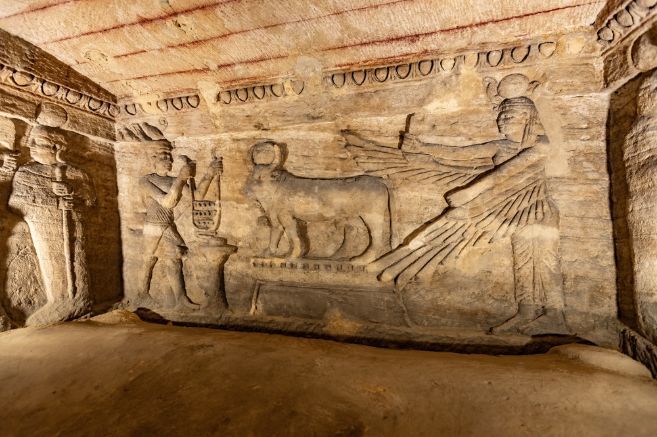
The Catacombs of Kom El Shoqafa hold immense historical importance, standing as the largest known Roman burial site in Egypt. Built in the 2nd century AD, they were likely commissioned for a wealthy Egyptian family that embraced both traditional Egyptian funerary customs and Greco-Roman aesthetics. This unique blend is visible in every carving and sculpture, depicting gods like Anubis dressed as Roman soldiers and funerary scenes that echo ancient Egyptian beliefs about the afterlife.
Unlike the royal tombs in The Valley of the Kings, the Catacombs of Kom El Shoqafa served as a communal burial site, showcasing how Alexandrians adapted Egyptian burial traditions to reflect the cosmopolitan culture of their city. The necropolis is a tangible reflection of Alexandria’s role as a crossroads of civilizations, blending artistic styles that narrate an evolving spiritual consciousness. Each chamber, corridor, and relief contributes to understanding how art and faith transcended borders during the Roman occupation of Egypt.
Architectural Mastery Beneath the Earth
The architecture of the Catacombs of Kom El Shoqafa is nothing short of extraordinary. Carved directly into solid rock, the complex extends several levels underground, featuring spiral staircases, central shafts, burial chambers, and ceremonial halls. The main staircase, adorned with columns and carvings, spirals around a central shaft that once lowered bodies using ropes and pulleys. The deeper one goes, the more fascinating the details become – from intricate reliefs to symbolic statuary blending Egyptian deities and Roman iconography.
The Hall of Caracalla, named after the Roman emperor Caracalla, is one of the most macabre sections, believed to contain the remains of humans and animals massacred during his reign. The architectural complexity here illustrates exceptional ancient engineering, especially considering the soft limestone composition of the area. The use of torches and oil lamps once illuminated these chambers, casting ghostly flickers upon the walls – a haunting yet mesmerizing image of ancient funerary rituals.
Symbolism and Artistic Fusion
What sets the Catacombs of Kom El Shoqafa apart from other ancient Egyptian burial sites is their symbolic and artistic diversity. The main burial chamber is flanked by statues of Anubis dressed in Roman military attire, symbolizing the guardianship of the dead across cultures. Reliefs depict the judgment of the soul, with Isis and Osiris appearing alongside Roman motifs like laurel wreaths and Corinthian columns.
This fusion of iconography represents a deep cultural exchange between Egypt and Rome. It shows how Egyptian spirituality adapted to foreign influences while retaining its core beliefs about death, resurrection, and eternal life. The symbolic carvings here are not merely decorative; they’re narrative tools that communicate the spiritual journey from the mortal world to the divine realm. For art historians, the catacombs offer a treasure trove of syncretic motifs that reveal how Alexandria’s identity evolved as a melting pot of ancient civilizations.
The Discovery and Excavation
The 1900 discovery of the Catacombs of Kom El Shoqafa was accidental yet monumental. Local residents stumbled upon the site when their donkey fell into a concealed shaft, exposing an entrance that had been hidden for centuries. Archaeologists soon realized the significance of their find – a remarkably preserved necropolis untouched since antiquity. Excavations revealed chambers filled with funerary art, sarcophagi, and remnants of offerings to the dead.
As researchers progressed, they unearthed evidence suggesting that the catacombs had been used for generations, possibly expanding over time. The preservation of limestone carvings and wall reliefs attests to the skill of ancient artisans and the reverence Alexandrians held for their ancestors. Today, the site stands as a testament to both accidental discovery and human curiosity, offering a glimpse into the rituals and artistry of a bygone era.
Spiritual and Cultural Importance of the Catacombs
Beyond their architectural marvel, the Catacombs of Kom El Shoqafa hold profound spiritual significance. The necropolis embodies Alexandria’s multicultural legacy – a place where Egyptian gods met Greek heroes and Roman emperors in artistic harmony. It demonstrates how faith transcended boundaries, merging philosophies and iconographies into a unified vision of the afterlife.
The structure also reflects a philosophical shift. While ancient Egyptians viewed the afterlife as a continuation of earthly existence, Roman influences introduced the idea of moral judgment and divine reward. As a result, the catacombs became an intersection where theology, art, and death converged. Visitors descending into its depths can still feel the sacred aura that once surrounded ancient funerary rites, echoing through the centuries in whispers carved into stone.
Visiting the Catacombs of Kom El Shoqafa Today
Modern travelers visiting Alexandria can explore the Catacombs of Kom El Shoqafa as part of immersive Egypt Excursions that delve into the nation’s Greco-Roman heritage. The site remains one of the most popular attractions in Alexandria, complementing visits to nearby landmarks such as the Library of Alexandria and The Citadel of Qaitbay. A trip here feels like a journey across time—each descending step revealing another chapter of Alexandria’s fascinating history.
Guided tours illuminate the cultural significance of each chamber, from the main rotunda to the banquet hall where families once held memorial feasts. The site’s dimly lit corridors enhance its mystique, making it a highlight for travelers interested in archaeology and ancient spirituality. Pairing a visit here with other historical wonders through specialized Egypt Travel Packages ensures a deeper appreciation of the country’s layered history and architectural diversity.
Preservation and Conservation Efforts
Preserving the Catacombs of Kom El Shoqafa is an ongoing challenge, given Egypt’s humid coastal climate and the delicate nature of limestone. Conservationists have implemented measures to stabilize the structure, regulate visitor flow, and prevent water seepage from damaging its intricate carvings. International archaeological missions have contributed to the careful restoration of sections that had deteriorated due to moisture and time.
These preservation initiatives ensure that future generations can marvel at Alexandria’s underground wonder without compromising its authenticity. The catacombs continue to serve as an essential educational site for historians, architects, and travelers keen on exploring Egypt’s multifaceted past.
Nearby Attractions to Explore
After exploring Kom El Shoqafa, visitors often continue their journey through Alexandria’s other historical treasures. The Montazah Palace offers a glimpse into royal elegance, while a stroll along the Stanley Bridge reveals modern architectural beauty along the Mediterranean. Combining these visits provides a full picture of Egypt’s evolution—from ancient necropolises to modern landmarks that continue to define its identity.
Frequently Asked Questions About the Catacombs of Kom El Shoqafa
1. When were the Catacombs of Kom El Shoqafa built?
The Catacombs of Kom El Shoqafa were constructed in the 2nd century AD during the Roman period. They served as a family tomb that later expanded into a communal burial site, blending Egyptian and Greco-Roman funerary traditions.
2. How were the Catacombs of Kom El Shoqafa discovered?
The site was discovered accidentally in 1900 when a donkey fell into a shaft that led to the underground chambers. Archaeologists soon excavated the area, revealing one of the most extraordinary archaeological finds in Alexandria.
3. What makes the Catacombs of Kom El Shoqafa unique?
These catacombs are unique because they showcase an extraordinary fusion of Egyptian, Greek, and Roman artistic styles. The blend of religious motifs, including depictions of Anubis and Roman iconography, symbolizes Alexandria’s multicultural heritage.
4. Can tourists visit the Catacombs of Kom El Shoqafa?
Yes, the site is open to visitors and remains one of Alexandria’s most visited attractions. Tourists can explore the underground chambers as part of guided tours or broader Egypt Vacation Packages that include Alexandria’s major landmarks.
5. What should visitors expect during their visit?
Visitors can expect to descend multiple levels below ground, walking through narrow passageways lined with carvings, statues, and sarcophagi. The atmosphere is both mysterious and awe-inspiring, offering a rare glimpse into Egypt’s Greco-Roman period and its artistic evolution.






Our Partners
Our Awesome Partners