Tell El Amarna Egypt
Tell El Amarna Egypt: The Lost City of Pharaoh Akhenaten and the Dawn of a New Faith
Tell El Amarna Egypt, also known simply as Amarna, stands as one of the most fascinating archaeological and historical sites in the world. Nestled on the east bank of the Nile River in the modern El Minya Governorate, this ancient city was once the beating heart of Egypt during the 18th Dynasty under Pharaoh Akhenaten. Built around 1350 BCE, Tell El Amarna Egypt marked a revolutionary shift in religion, art, and royal ideology, as it became the center of worship for the sun disk Aten. Unlike the grand temples of Karnak Temple or the long-standing Theban dynasties, Amarna was short-lived—a fleeting yet remarkable experiment in divine monarchy and monotheism that vanished almost as quickly as it rose.
This city wasn't just another settlement—it was Akhenaten’s bold declaration of faith. The pharaoh envisioned Amarna as a sacred utopia dedicated to Aten, breaking from centuries of traditional Egyptian polytheism. The city’s symmetry, architecture, and artistic style reflected a deep philosophical transformation that would forever change the narrative of ancient Egypt. Today, amidst the windswept ruins of Tell El Amarna Egypt, archaeologists uncover fragments of frescoes, temples, and royal tombs that whisper tales of devotion, rebellion, and the mysterious royal family that ruled here—including the enigmatic Queen Nefertiti and the young Tutankhamun. Visitors exploring this site find themselves drawn into a story of ambition, heresy, and the eternal quest for divine truth.
Historical Background of Tell El Amarna Egypt
Tell El Amarna Egypt was established during the reign of Akhenaten, originally known as Amenhotep IV, who defied the religious order of his time by abandoning the traditional gods of Egypt. He proclaimed Aten—the visible sun disk—as the sole deity. This radical move, often referred to as the Amarna Revolution, led to the relocation of Egypt’s capital from Thebes to this virgin desert plain along the Nile. Akhenaten’s decision to build a new capital, Akhetaten, meaning “Horizon of the Aten,” was symbolic of his spiritual rebirth and separation from the old priesthood of Amun.
The founding of Tell El Amarna Egypt created a cultural and religious upheaval. The city was constructed rapidly, displaying a unique artistic style with naturalistic depictions of the royal family, intimate domestic scenes, and vibrant colors. These revolutionary artistic expressions sharply contrasted the rigid formality of earlier dynasties, reflecting Akhenaten’s desire for a more personal connection between humans and divinity.
The Religious Revolution in Amarna
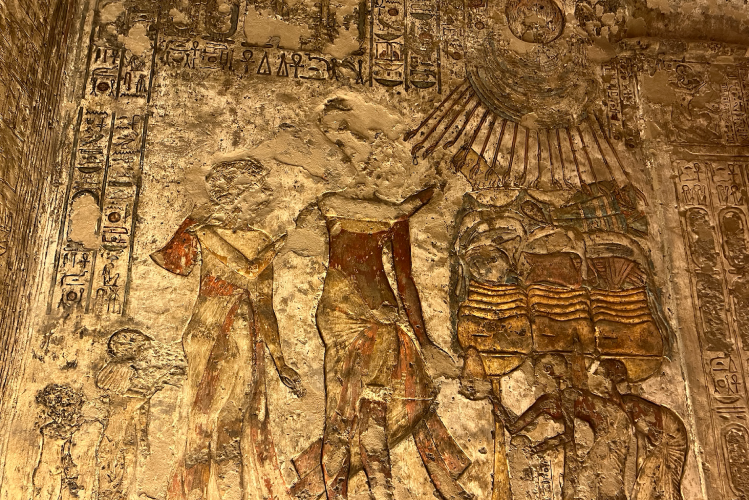
The religious transformation initiated in Tell El Amarna Egypt was unlike anything seen in ancient Egypt. Akhenaten replaced the pantheon of gods with Aten, depicted as a radiant sun disk with life-giving rays. This shift wasn’t merely theological—it reshaped politics, art, and governance. Priests who once held immense power under the worship of Amun were displaced, their temples left to decay. In doing so, Akhenaten centralized both spiritual and political power within the monarchy, positioning himself as the sole intermediary of Aten’s divine will.
Many Egyptologists believe that this early form of monotheism influenced later religious ideas. The temple complexes in Amarna were designed with open courtyards to let the sunlight flood in, a physical manifestation of Aten’s omnipresent radiance. This innovative architectural approach remains evident in the ruins of the Great Temple of Aten. While the experiment was short-lived, its impact resonates through the corridors of history as one of the most daring spiritual revolutions ever attempted.
Artistic and Cultural Flourishing in Tell El Amarna Egypt
Tell El Amarna Egypt gave rise to a unique art style known today as Amarna art. It broke away from the stiff, idealized forms of earlier Egyptian art, embracing realism and emotion. Akhenaten and Nefertiti were often portrayed with elongated heads, almond-shaped eyes, and tender gestures toward their daughters. These depictions symbolized divine grace and human intimacy, blending spirituality with daily life.
Artists in Amarna captured scenes of family life, worship, and nature, celebrating the sun’s life-giving warmth. The artistic revolution paralleled the religious one, emphasizing Akhenaten’s belief in beauty, truth, and divine light. It was also during this period that the famous bust of Nefertiti—now one of the world’s most recognized artifacts—was crafted, embodying the elegance and sophistication of Amarna’s creative legacy.
Urban Planning and Architecture of Tell El Amarna Egypt
The city’s layout was meticulously planned. Tell El Amarna Egypt stretched along the Nile and was divided into distinct zones: royal residences, administrative buildings, temples, and workers’ villages. The Great Palace, the Small Aten Temple, and the royal tombs in the eastern cliffs demonstrated a new architectural philosophy focused on openness and solar alignment. Unlike the enclosed sanctuaries of Thebes, Amarna’s temples were open to the sky, reflecting Aten’s divine presence.
Residential areas displayed advanced urban planning with streets, workshops, and storage facilities. The North Palace, believed to be associated with Nefertiti, and the Government Offices of the pharaoh’s court revealed a society deeply integrated with its theological mission. Archaeologists today continue to uncover artifacts that illuminate daily life—pottery, tools, and inscriptions that paint a vivid picture of a city thriving under divine light and royal ambition.
The End of Tell El Amarna Egypt and Its Legacy
After Akhenaten’s death, the city of Tell El Amarna Egypt fell rapidly into decline. His reforms were reversed by his successors, most notably Tutankhamun, who restored the old gods and moved the capital back to Thebes. The Amarna period became an episode many Egyptians sought to erase from history—Akhenaten’s name was chiseled off monuments, and his city abandoned to the desert winds.
Yet, the legacy of Amarna endures. Archaeological excavations have revealed the city’s grandeur, uncovering tombs, stelae, and royal inscriptions that chronicle Akhenaten’s vision. The Amarna Letters—clay tablets inscribed in cuneiform—offer invaluable insight into Egypt’s diplomatic relations, trade, and political intrigues with neighboring kingdoms. These discoveries continue to reshape our understanding of ancient Egypt’s complexity, innovation, and humanity.
Modern Exploration and Tourism in Tell El Amarna Egypt
Today, Tell El Amarna Egypt draws scholars, travelers, and history enthusiasts from around the world. Its proximity to El Minya makes it accessible for visitors seeking an off-the-beaten-path adventure. Exploring the royal tombs, the Great Aten Temple, and the ruins of the royal palace transports travelers back to one of Egypt’s most mysterious chapters.
For visitors planning a journey through Egypt, combining Tell El Amarna with other monumental destinations such as the Great Pyramids of Giza, the Valley of the Kings, and Egypt Nile Cruises offers a complete immersion into the timelines of pharaonic evolution. Tell El Amarna’s haunting beauty reminds every traveler that even the most ambitious dreams can fade, yet leave behind eternal echoes carved in stone and sand.
FAQs About Tell El Amarna Egypt
What is Tell El Amarna Egypt and why is it important?
Tell El Amarna Egypt was the capital city built by Pharaoh Akhenaten during the 18th Dynasty. It’s significant because it represents one of the earliest known attempts at monotheism in human history. Dedicated to the sun god Aten, the city symbolized a profound shift in religion, art, and governance that influenced Egypt’s cultural narrative for centuries.
Who built Tell El Amarna Egypt?
Tell El Amarna was founded by Pharaoh Akhenaten, who ruled Egypt around 1350 BCE. He built it as a spiritual capital devoted exclusively to Aten, breaking away from the traditional worship of Amun and other deities. Akhenaten’s vision made Amarna a revolutionary, though short-lived, center of worship and innovation.
What can visitors see at Tell El Amarna today?
Visitors can explore the remnants of temples, tombs, palaces, and workers’ villages. Key sites include the Great Temple of Aten, the Royal Tombs, and the North Palace. The serene landscape and ancient carvings provide a vivid glimpse into the Amarna period’s cultural and artistic ideals.
How can I visit Tell El Amarna Egypt?
Tell El Amarna is located near El Minya in Middle Egypt. Many Egypt Excursions include visits to this area, often combined with nearby attractions like the Beni Hassan Tombs. You can also plan personalized Egypt Travel Packages that include Amarna for a deep dive into Egypt’s lesser-known wonders.
What happened to Tell El Amarna after Akhenaten’s death?
After Akhenaten’s death, his successors abandoned Tell El Amarna, restoring the traditional gods and moving the capital to Thebes. The city fell to ruin, its memory buried under sand for centuries. Today, ongoing excavations continue to uncover new insights into its brief but groundbreaking existence, offering visitors a chance to witness the remnants of Egypt’s most controversial era.

Our Partners
Our Awesome Partners