Kom Ombo Temple
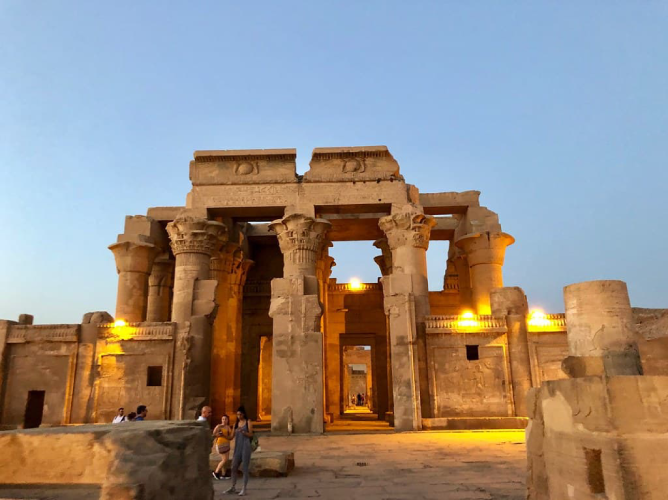
Kom Ombo Temple: The Twin Sanctuary of the Nile’s Ancient Mysteries
Perched gracefully on the eastern banks of the Nile River, the Kom Ombo Temple stands as one of Egypt’s most enigmatic and unique architectural masterpieces. Unlike any other ancient Egyptian sanctuary, this temple honors two gods simultaneously—Sobek, the crocodile god of fertility and power, and Horus the Elder, the falcon-headed god of kingship and protection. This dual dedication gives Kom Ombo Temple an extraordinary symmetry, where every chamber, hall, and shrine mirrors its counterpart. Built during the Ptolemaic dynasty between 180 and 47 BCE, the site weaves together stories of devotion, medical wonders, and the enduring link between nature and divinity. Travelers exploring Kom Ombo often find themselves awestruck not just by its balanced design but by the tales inscribed into its walls—echoes of an era when gods ruled alongside kings.
Located north of Aswan, this temple marks a crucial stop on many Egypt Nile Cruises, enchanting visitors with its serene riverside setting. The golden hues of sunset reflecting on the sandstone blocks make Kom Ombo a photographer’s dream, while the nearby Crocodile Museum draws curiosity seekers eager to learn about the sacred reptiles that once thrived in this region. The temple’s significance stretches beyond religion—it was a hub of healing, astronomy, and daily life. To step within its walls is to walk through a living chronicle of ancient Egyptian civilization, its celestial beliefs, and its timeless artistry.
The Historical Legacy of Kom Ombo Temple
The Kom Ombo Temple traces its roots to the Ptolemaic era, when Greek rulers sought to merge Egyptian and Hellenistic traditions. Pharaoh Ptolemy VI Philometor initiated its construction, while later rulers expanded its grandeur. Its location along the Nile made it a central religious and commercial site, serving as a pilgrimage destination for locals traveling the river. Archaeological evidence suggests that earlier shrines existed here during the New Kingdom, proving the area’s long-standing sacred reputation. The temple’s dual symmetry represents not only two gods but also the balance between life and death, light and darkness, and order and chaos—concepts deeply rooted in Egyptian cosmology.
Kom Ombo’s architectural beauty mirrors that of other monumental temples such as Edfu Temple and the nearby Temple of Philae, both of which celebrate divine harmony through meticulous stone craftsmanship. The hieroglyphic inscriptions reveal not only rituals but also detailed knowledge of anatomy, astrology, and sacred geometry—an insight into the scientific sophistication of ancient Egypt.
Architectural Design: A Perfect Symmetry of Faith
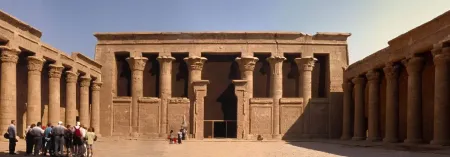
The most fascinating aspect of Kom Ombo Temple lies in its symmetrical architecture. Each half mirrors the other, with twin sanctuaries, halls, and altars devoted separately to Sobek and Horus. Visitors entering the Hypostyle Hall are greeted by massive columns adorned with floral capitals and reliefs depicting pharaohs offering to both gods. The inner sanctuaries, once illuminated by sacred fires, were designed to host rituals that symbolized the cosmic order. The dual design not only catered to both deities but also reflected the Ptolemaic rulers’ political strategy—uniting two religious communities under one harmonious space.
Walking through Kom Ombo feels like journeying through a sacred riddle. Every wall tells a story, from the carved medical instruments used by temple healers to depictions of surgical procedures and childbirth. These engravings have fueled speculation that Kom Ombo once served as a healing center, making it one of the earliest known medical establishments in human history.
The Crocodile God Sobek: Protector and Destroyer
Sobek, worshiped as the formidable crocodile god, was believed to control the Nile’s fertility and safeguard Egypt’s prosperity. In ancient times, crocodiles were simultaneously feared and revered, embodying both chaos and renewal. The priests of Sobek maintained sacred crocodiles within the temple precinct, feeding them lavishly and adorning them with jewels. Upon death, these reptiles were mummified with great reverence—a practice that modern visitors can witness through preserved remains displayed in the Crocodile Museum adjacent to the temple. Sobek’s cult symbolized not only protection but also the unpredictable might of nature, an ever-present force shaping Egyptian life along the Nile.
The connection between Sobek and fertility aligned perfectly with the agricultural rhythms of the Nile. Farmers offered prayers to Sobek for abundant harvests and safe navigation, reinforcing his role as both guardian and giver of life. His presence within Kom Ombo Temple thus resonated deeply with the people’s daily existence.
Horus the Elder: The Falcon of Kingship and Divine Justice
Opposing Sobek’s primal power is Horus the Elder, the falcon-headed deity representing royal authority and the triumph of order. In Egyptian mythology, Horus embodies the victory of good over evil, light over darkness. The dual presence of Horus alongside Sobek within the temple symbolizes equilibrium—each god balancing the other’s force. The temple’s reliefs depict Horus crowned with the double crown of Upper and Lower Egypt, emphasizing the unity of the nation under divine rule. Worshippers sought Horus’s blessings for justice, protection, and success in battle, reaffirming the belief that kings ruled as earthly embodiments of the falcon god.
Medical and Astronomical Significance of Kom Ombo
Beyond its religious grandeur, Kom Ombo Temple played an essential role in ancient Egypt’s scientific advancements. The temple reliefs include the earliest known representations of surgical tools—forceps, scalpels, and dental instruments. These carvings provide compelling evidence of Egypt’s advanced medical knowledge and the priests’ dual role as healers. The temple’s inscriptions also align with celestial observations, suggesting that rituals were timed according to lunar and solar cycles. Such precision highlights how deeply astronomy influenced religious ceremonies and agricultural planning along the Nile.
Kom Ombo thus bridged the gap between faith and science, illustrating Egypt’s belief that divine wisdom and human knowledge were intertwined. This holistic worldview inspired future generations, influencing both Greek and Roman medicinal practices.
Strategic Location on the Nile
Strategically positioned between Aswan City and Luxor City, Kom Ombo Temple served as a vital trading and religious hub. Ancient travelers and merchants passing along the mighty river stopped here to offer prayers, ensuring safe passage and prosperous ventures. Its elevated location protected it from floods and allowed priests to observe celestial movements clearly. Even today, visitors arriving via Egypt Travel Packages or luxury cruises find this setting captivating—a tranquil respite framed by palm groves and shimmering waters.
Modern Discoveries and Preservation Efforts
Over the centuries, Kom Ombo Temple suffered erosion, earthquakes, and floods, yet meticulous restoration has revived its splendor. Archaeologists have unearthed crocodile mummies, inscriptions, and hidden chambers that shed light on ancient practices. Modern conservation projects ensure that future generations can continue exploring this dual sanctuary. With the support of heritage organizations, the temple now stands as a symbol of Egypt’s enduring cultural legacy and as a must-see stop for travelers navigating Best Nile River Cruises.
Visiting Kom Ombo Temple: What to Expect
Tourists visiting Kom Ombo find a seamless blend of spirituality, history, and breathtaking scenery. The temple is best explored during early morning or sunset when the sandstone glows golden under the desert light. The adjacent Crocodile Museum offers a fascinating collection of artifacts and mummified reptiles, deepening the visitor’s understanding of Sobek’s cult. Guided tours often pair Kom Ombo with Edfu and Philae, crafting an immersive journey through the spiritual corridors of ancient Egypt. Whether you’re an archaeology enthusiast, a history lover, or simply curious about the mysteries of the Nile, Kom Ombo promises an unforgettable experience.
Travelers seeking complete immersion can combine temple visits with tailored Egypt Vacations Packages, ensuring comfortable stays, expert guides, and scenic Nile journeys. The site’s accessibility and preserved details make it an essential highlight of southern Egypt’s monumental landscape.
FAQs About Kom Ombo Temple
What makes Kom Ombo Temple unique?
Kom Ombo Temple stands out for its dual dedication to Sobek and Horus, reflected in its perfectly symmetrical design. Each half of the temple mirrors the other, symbolizing harmony between opposing forces such as life and death, chaos and order.
Where is Kom Ombo Temple located?
The temple is located about 45 kilometers north of Aswan on the eastern bank of the Nile River. Its riverside setting makes it a frequent stop for travelers on Nile cruises exploring Upper Egypt’s ancient wonders.
What deities were worshiped at Kom Ombo Temple?
The temple honored two gods: Sobek, the crocodile god associated with fertility and protection, and Horus the Elder, the falcon-headed god representing kingship and justice. Each deity had its own sanctuary and set of rituals.
What can visitors see at Kom Ombo Temple today?
Today, visitors can admire intricate carvings, symmetrical halls, and medical reliefs depicting ancient surgical instruments. The nearby Crocodile Museum displays mummified crocodiles and artifacts discovered in the temple’s vicinity.
When is the best time to visit Kom Ombo Temple?
The best time to visit Kom Ombo is between October and April, when temperatures are cooler. Early mornings or late afternoons offer ideal lighting for photography and peaceful exploration of the temple’s sacred grounds.
Planning your Egypt trip? See our Enjoyable Tour to Kom Ombo and Edfu Temples from Aswan.


Our Partners
Our Awesome Partners