

Edfu Temple
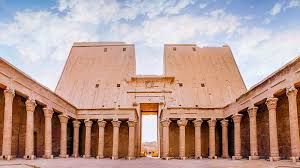
Edfu Temple: An Eternal Sanctuary of Horus on the Banks of the Nile
Tucked between Luxor City and Aswan City, the Edfu Temple—also known as the Temple of Horus—stands as one of the best-preserved monuments of ancient Egypt. Rising majestically along the western bank of the Nile, this monumental complex captures the essence of Egypt’s architectural genius and religious devotion. Built during the Ptolemaic Dynasty, between 237 and 57 BCE, it serves as a living chronicle of spiritual life, mythology, and artistic mastery. Travelers exploring Egypt's timeless wonders are drawn to Edfu's towering pylons, intricate reliefs, and awe-inspiring symmetry that reflect a civilization obsessed with precision, symbolism, and divine order.
As one steps through the colossal gateway, the whispers of history echo from every sandstone block. Edfu Temple isn’t just a ruin—it’s a storybook etched in stone, narrating the eternal struggle between good and evil embodied in the god Horus and his uncle, the chaotic Seth. Its inscriptions reveal ancient rites, celestial alignments, and festivals that celebrated cosmic balance. Centuries of desert winds and Nile floods couldn’t erase its grandeur; instead, Edfu remains a beacon for archaeologists, historians, and curious travelers eager to uncover the mysteries of pharaonic spirituality. Whether you’re cruising the Egypt Nile Cruises or venturing through legendary cities, Edfu Temple promises a journey through divinity, mythology, and unmatched architectural splendor.
The Historical Significance of Edfu Temple: A Chronicle of Divine Power
Edfu Temple stands as a monumental tribute to Horus, the falcon-headed god of kingship, protection, and victory. The structure marks one of the last great attempts of ancient Egyptians to honor their deities before the rise of foreign rule. Its cornerstone was laid under Ptolemy III Euergetes, and construction continued for nearly two centuries. Every relief and inscription unveils the socio-political landscape of Ptolemaic Egypt, blending Greek influence with traditional Egyptian belief systems. In many ways, Edfu represented a cultural bridge where two worlds converged—ancient Egyptian spirituality and Hellenistic artistic sensibilities.
The temple’s alignment along the Nile mirrors Egypt’s cosmic philosophy, symbolizing rebirth and eternal life. It served as both a religious sanctuary and an educational center, preserving sacred texts that detailed rituals, offerings, and divine teachings. For those fascinated by the continuity of Egyptian faith, Edfu Temple offers unparalleled insights into the late phases of temple architecture and the ever-evolving theology that defined the kingdom’s last golden era. Travelers who delve into Egypt’s rich tapestry often include this site within their Egypt Travel Packages for its historical depth and aesthetic perfection.
Architecture and Design: A Testament to Ptolemaic Grandeur
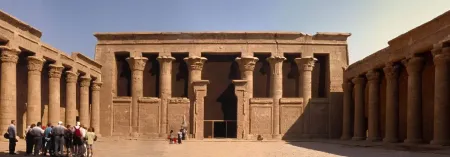
The layout of Edfu Temple follows the classic pattern of Egyptian sacred architecture, yet it’s executed with such precision that it appears timeless. The entrance pylon, standing at a staggering 36 meters, is among the largest in Egypt. It’s adorned with vivid carvings of Horus defeating Seth—an eternal reminder of the triumph of order over chaos. Beyond the gateway lies an open courtyard surrounded by towering colonnades, each column ornately decorated with lotus and papyrus capitals representing Upper and Lower Egypt. The hypostyle halls, with their forest of columns, lead worshippers toward the sanctum where Horus’s statue once stood in a gilded shrine.
The temple’s walls are covered in more than 120,000 hieroglyphic inscriptions, narrating rituals such as the “Feast of the Beautiful Meeting,” celebrating the union of Horus and Hathor. These scenes offer scholars vital information on ancient ceremonies, astronomical observations, and religious hierarchies. The balance of light and shadow within the corridors adds an almost mystical dimension—each chamber representing a different stage in the initiate’s spiritual journey. Those who appreciate similar architectural innovation can draw parallels while visiting the Karnak Temple or the Luxor Temple.
The Religious Symbolism of Horus: The Falcon God of Edfu
Horus, the central deity worshipped at Edfu, remains one of the most revered gods in Egyptian mythology. Representing kingship, divine justice, and celestial vision, Horus was believed to protect both ruler and realm. The temple tells the mythic saga of his avenging battle against Seth, who had slain his father Osiris. The triumph of Horus served as a divine template for earthly kingship—every pharaoh was considered his earthly manifestation. The sacred rituals performed here reaffirmed the pharaoh’s legitimacy and the cosmic order, or “Ma’at.”
At the heart of the sanctuary once stood a sacred barque upon which Horus’s statue was carried during great processions to Dendera, uniting him with Hathor, goddess of love and fertility. This symbolic marriage reaffirmed harmony between masculine and feminine divine principles. Visitors today can still admire the granite altar and barque shrine, exploring the corridors that echo with the chants of ancient priests. Exploring the mythology here provides context for other sacred sites like the Temple of Philae, dedicated to Isis, the mother of Horus.
Edfu Temple’s Rediscovery and Modern Legacy
For centuries, Edfu Temple lay buried beneath sand and silt, preserved almost miraculously until its rediscovery in the 19th century by Auguste Mariette, a French archaeologist. When the sands were cleared, the world witnessed one of the most complete examples of ancient Egyptian temple architecture ever uncovered. Its walls, inscriptions, and reliefs remained nearly intact, offering a time capsule of Ptolemaic religious life. Today, it stands as a highlight for travelers cruising between Luxor and Aswan, often part of luxury itineraries and Egypt Luxury Tours.
Modern conservation efforts ensure that Edfu continues to inspire future generations. The temple is now a UNESCO-protected site, open to visitors who seek not only grandeur but also spiritual connection. The dramatic sound-and-light shows at dusk bring the ancient myths to life, immersing viewers in the world of Horus and the gods. Edfu’s enduring beauty reminds humanity that devotion and artistry can truly defy time.
Traveling to Edfu Temple: Practical Tips and Visitor Insights
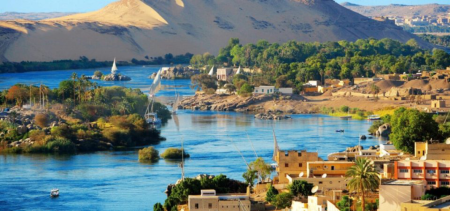
The easiest way to reach Edfu Temple is by sailing along the The Nile River, where the temple serves as a popular docking point for cruise travelers. Visitors can also reach Edfu by road from either Luxor or Aswan. The best time to visit is between October and April, when the weather is mild and the lighting ideal for photography. Arriving early in the morning ensures fewer crowds and a serene atmosphere for exploring the hypostyle halls and sanctuaries.
Tourists often combine Edfu Temple visits with other nearby sanctuaries like the Kom Ombo Temple or Dandara Temple. These combined itineraries offer a holistic view of Egypt’s sacred geography. For travelers seeking curated experiences, guided tours through Egypt Excursions or Egypt Vacations Packages include Edfu as a key destination, ensuring expertly narrated insights into its architectural marvels and mythological tales.
Why Edfu Temple Remains a Must-Visit Site in Egypt
Edfu Temple’s magnetic appeal lies in its authenticity. Unlike other sites heavily reconstructed or eroded by time, Edfu stands almost untouched—a genuine relic of divine architecture. It’s a place where visitors can physically trace the footsteps of ancient priests, feel the cool stone of the hypostyle columns, and imagine the incense-filled air of long-lost rituals. Beyond its grandeur, Edfu represents resilience—a temple that survived conquest, neglect, and the drift of centuries, only to rise again as a global treasure.
For those chasing Egypt’s most iconic experiences, Edfu Temple encapsulates the very heart of pharaonic devotion. It’s a cornerstone of heritage and a testament to humanity’s eternal quest to connect with the divine. Whether you’re an archaeologist, a history buff, or simply a traveler with a curious mind, standing before the towering pylons of Edfu ignites a sense of wonder that bridges millennia.
FAQs About Edfu Temple
What makes Edfu Temple unique compared to other ancient Egyptian temples?
Edfu Temple is the most complete and best-preserved temple in Egypt, dedicated to Horus. Unlike many other temples that suffered erosion or destruction, Edfu remains nearly intact, allowing visitors to experience authentic Ptolemaic architecture and detailed hieroglyphic inscriptions that vividly portray Egyptian mythology.
When was Edfu Temple built?
Construction of Edfu Temple began in 237 BCE under Ptolemy III Euergetes and was completed in 57 BCE during the reign of Ptolemy XII. The 180-year endeavor represents the meticulous craftsmanship of the Ptolemaic era, marking the culmination of traditional temple construction in ancient Egypt.
What deity was worshipped at the Edfu Temple?
The temple is dedicated to Horus, the falcon-headed god of the sky, kingship, and protection. His mythic victory over Seth, symbolizing good triumphing over evil, is immortalized in the temple’s reliefs, making it a central site for understanding Egyptian religious symbolism.
How can travelers visit Edfu Temple today?
Most visitors reach Edfu as part of organized Best Nile River Cruises or overland tours between Luxor and Aswan. The temple is open year-round, with visitor-friendly infrastructure including guides, lighting shows, and museum facilities nearby.
What are nearby attractions to explore with Edfu Temple?
Visitors often combine Edfu with nearby attractions like the Kom Ombo Temple, Dandara Temple, and the Temple of Philae in Aswan. These sites collectively offer a complete picture of Egypt’s late-period religious landscape, making Edfu a perfect inclusion in extended Nile tour itineraries.


Our Partners
Our Awesome Partners