

Meidum Pyramid
Meidum Pyramid – The Mysterious Transition from Step to True Pyramid in Ancient Egypt
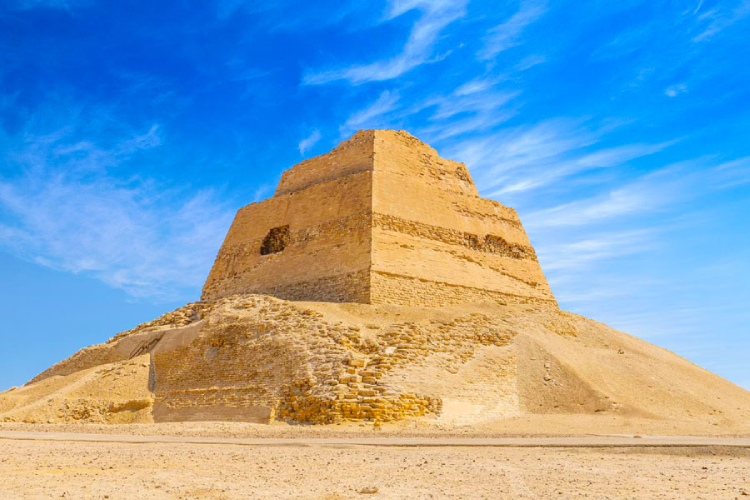
Standing solemnly on the edge of the desert near Fayoum City, the Meidum Pyramid, often called ‘the collapsed pyramid,’ remains one of Egypt’s most fascinating architectural enigmas. This ancient monument, attributed to Pharaoh Sneferu of the Fourth Dynasty (around 2600 BCE), marks a pivotal turning point in Egyptian pyramid construction. As one gazes upon its partially collapsed core, the Meidum Pyramid reveals the experimental evolution of engineering that laid the foundation for the more iconic structures at the Great Pyramids of Giza. Scholars and travelers alike are drawn to its eerie beauty and the questions it still poses about ancient design, innovation, and ambition.
The Meidum Pyramid once stood as one of the most magnificent monuments of the Old Kingdom, representing Sneferu’s bold attempt to perfect the classic pyramid shape. It bridges the gap between the earlier step pyramids of Sakkara Necropolis and the smooth-sided pyramids of Dahshur and Giza. Despite its current ruined state, its significance in Egyptology cannot be overstated. Its surroundings, including subsidiary tombs and a mortuary temple, offer crucial insights into funerary practices and architectural evolution during the Fourth Dynasty. The Meidum Pyramid, though lesser-known than its more famous counterparts, plays a starring role in understanding how the Egyptians mastered the art of eternal monuments.
The Historical Background of the Meidum Pyramid
The Meidum Pyramid’s history begins with Pharaoh Huni, the last ruler of the Third Dynasty, who may have initiated the structure as a step pyramid. Upon ascending the throne, Pharaoh Sneferu, one of Egypt’s most innovative builders, transformed it into a true pyramid by filling in the steps with limestone casing to create smooth sides. This transformation reflects a bold architectural experiment that would eventually lead to the perfection of pyramid geometry seen in Sneferu’s later creations, such as the Bent and Red Pyramids in Dahshour.
Historians believe that Sneferu’s drive to innovate wasn’t only about achieving grandeur but also spiritual symbolism. The smooth, triangular shape of the true pyramid represented the rays of the sun, linking the pharaoh with Ra, the sun god, in his journey to the afterlife. Thus, the Meidum Pyramid marks not just a technical step forward but also a theological one, merging divine aspiration with architectural precision.
Architectural Features and Design of the Meidum Pyramid
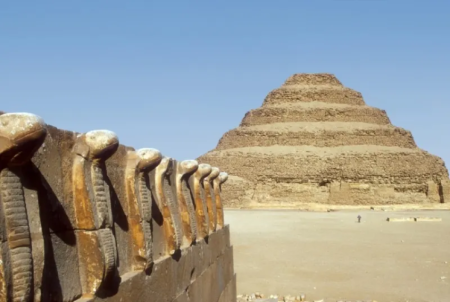
The Meidum Pyramid originally stood around 92 meters high, though today much of it lies in ruins, with only its inner core visible, resembling a massive three-tiered tower. The pyramid was constructed in several phases: beginning as a seven-step design, later expanded to eight, and finally encased to form smooth sides. This ambitious modification, however, proved structurally unstable, leading to the collapse of the outer casing likely during or shortly after construction.
The entrance, located on the north face, leads to a descending passage connected to a vertical shaft that opens into the burial chamber beneath the pyramid’s core. Although modest compared to later pyramids, its internal layout reveals early experimentation with internal architecture. Nearby, archaeologists discovered remains of a mortuary temple, causeway, and subsidiary mastabas, indicating its function as a full funerary complex similar in concept to later grander sites like those in Giza City.
The Collapse and Its Lasting Mystery
One of the most debated aspects of the Meidum Pyramid is the reason for its collapse. Some scholars argue that the outer casing was poorly supported due to a lack of bonding between the layers, while others suggest the pyramid was abandoned before completion and deteriorated over time. Whatever the cause, the disaster provided crucial lessons that influenced subsequent pyramid designs. Sneferu’s architects learned to redistribute weight more evenly in later projects, leading to the stability seen in the Red Pyramid.
This structural failure transformed the Meidum Pyramid into an unintentional archaeological treasure. It allows modern researchers to study the transitional techniques between the step and true pyramid. Its current appearance—half ruin, half majesty—evokes a haunting reminder of both human ambition and nature’s reclaiming power over time.
The Meidum Pyramid’s Role in Ancient Egyptian Engineering Evolution
The Meidum Pyramid stands as a milestone in the evolution of pyramid engineering. The transition from the step pyramid design pioneered by Imhotep at Saqqara to the true pyramid required advances in geometry, weight distribution, and limestone casing techniques. Meidum’s partial collapse likely informed Sneferu’s later decisions to alter the gradient and internal structure of the Bent Pyramid, showcasing a rapid learning curve in the early Fourth Dynasty’s architectural experimentation.
This experimentation revolutionized Egyptian construction, paving the way for the monumental perfection achieved in Khufu’s Great Pyramid. Without the lessons learned from Meidum’s failure, Egypt’s most famous wonders might never have reached their lasting stability and aesthetic harmony.
Symbolism and Religious Significance of the Meidum Pyramid
Beyond its structural importance, the Meidum Pyramid held deep religious symbolism. To the ancient Egyptians, pyramids were more than royal tombs—they were stairways to the heavens. The smooth sides represented a pharaoh’s ascent toward the divine realm, merging life, death, and rebirth in a single architectural form. The Meidum Pyramid’s alignment with the cardinal points and its integration into a larger mortuary complex underscore the Egyptians’ meticulous spiritual planning.
Even in its ruin, the Meidum Pyramid continues to embody the eternal quest for immortality. Its serene desert setting near the fertile lands of the Nile mirrors the Egyptian worldview—balance between life and the afterlife, between order and chaos, between permanence and decay.
Modern Discoveries and Archaeological Studies
Archaeological missions at Meidum have unearthed fascinating insights into construction techniques, tools, and workforce organization. Excavations revealed the remains of workers’ villages, pottery fragments, and stone-cutting instruments, helping historians piece together the logistics behind such monumental projects. Studies of the surrounding mastabas indicate Meidum served as a burial ground for royal family members and high officials, further cementing its status as a sacred site of power and devotion.
In recent years, advanced technologies such as 3D scanning and ground-penetrating radar have been applied to the site, revealing hidden layers within the pyramid’s core. These non-invasive studies continue to reshape our understanding of Old Kingdom construction methodologies and the genius of ancient Egyptian architects.
Visiting the Meidum Pyramid Today
For modern travelers seeking to uncover Egypt’s lesser-known marvels, the Meidum Pyramid offers a profoundly atmospheric experience. Far from the bustling crowds of Cairo or Giza, it provides an intimate glimpse into Egypt’s architectural experimentation. The site’s quiet desert backdrop, enhanced by the golden hues of sunset, transforms the visit into a contemplative journey through time. Many visitors pair their exploration with trips to the nearby Egypt Desert Tours or enjoy relaxing detours around the lush oases of Fayoum, including Qarun Lake and Wadi El Rayan.
The serenity of Meidum contrasts beautifully with larger sites like Egypt Luxury Tours often highlight. Its accessibility from Cairo makes it an ideal inclusion in curated Egypt Travel Packages that explore off-the-beaten-path destinations.
Preservation Efforts and Challenges
Although the Meidum Pyramid has withstood millennia of exposure, ongoing conservation challenges threaten its stability. Wind erosion, temperature fluctuations, and human activity continue to wear away at the remaining structure. The Egyptian Ministry of Tourism and Antiquities, along with international archaeologists, has initiated preservation programs to document, stabilize, and protect the site. Conservationists also aim to improve visitor facilities, ensuring that future generations can appreciate this ancient marvel without compromising its integrity.
FAQs about the Meidum Pyramid
What is the Meidum Pyramid famous for?
The Meidum Pyramid is renowned for being Egypt’s first attempt at constructing a true pyramid. Its partial collapse reveals the transitional phase between the step pyramids and the smooth-sided pyramids perfected later by Pharaoh Sneferu and his successors. It symbolizes both architectural ambition and innovation in ancient Egypt.
Who built the Meidum Pyramid?
The pyramid was initially started under Pharaoh Huni of the Third Dynasty and later completed or modified by his successor, Pharaoh Sneferu. Sneferu’s architectural vision transformed it into one of the earliest smooth-sided pyramids, setting the stage for the future glories of Giza and Dahshur.
Where is the Meidum Pyramid located?
The Meidum Pyramid is located near the village of Meidum, approximately 100 kilometers south of Cairo, close to the fertile lands of the Fayoum region. Its isolated setting makes it a tranquil destination for travelers seeking a more intimate encounter with Egypt’s ancient past.
Can visitors enter the Meidum Pyramid?
Yes, visitors can descend into the pyramid’s interior through a narrow passage on the northern face. Inside, one can explore the burial chamber and view the remnants of the ancient construction techniques that shaped early pyramid design. However, access may depend on current restoration and safety regulations.
Why did the Meidum Pyramid collapse?
Most experts believe the collapse resulted from architectural miscalculations when converting the step pyramid into a smooth-sided one. The outer casing wasn’t properly bonded to the inner structure, causing instability. Over time, the weight of the stone led to the slippage and eventual collapse of the outer layers, leaving the distinctive core visible today.
Conclusion: The Enduring Legacy of the Meidum Pyramid
The Meidum Pyramid stands as both a cautionary tale and a triumph of human innovation. In its weathered stones lies the blueprint of future perfection—an enduring reminder of how the Egyptians transformed vision into timeless reality. For those exploring Egypt’s architectural wonders, from the majestic The Grand Egyptian Museum to the serene landscapes of Meidum, this pyramid remains an unmissable chapter in the story of civilization’s earliest engineers. It captures the spirit of progress, the awe of ambition, and the eternal dialogue between the human will and the sands of time.






Our Partners
Our Awesome Partners