
Dahshour
Dahshour: The Hidden Pyramid Field That Changed Egyptian Architecture Forever
Just a short drive south of Giza City lies Dahshour, an archaeological treasure often overshadowed by its more famous northern neighbors. Yet, Dahshour’s sands cradle some of Egypt’s most revolutionary monuments—the Bent Pyramid and the Red Pyramid—both architectural masterpieces built during the reign of Pharaoh Sneferu, founder of the Fourth Dynasty. This ancient royal necropolis doesn’t just offer a glimpse into early pyramid construction; it unfolds the very evolution of Egypt’s grand funerary traditions. For those who crave authenticity and untamed charm far from bustling tourist crowds, Dahshour stands as an extraordinary destination that whispers secrets of innovation, ambition, and devotion to the divine. Visitors who venture here experience the raw essence of Egypt’s golden age, the dawn of pyramid perfection, and the architectural experiments that paved the way for the Great Pyramids of Giza.
Set within the vast desert plateau south of Sakkara Necropolis and near the ancient city of Memphis Egypt, the old Egyptian capital, Dahshour unites mystery and innovation. Unlike heavily commercialized sites, this sacred land remains serene, inviting explorers to tread where ancient architects risked everything to transform stone into enduring legacy. The Red Pyramid, often dubbed “the first true pyramid,” and the uniquely curved Bent Pyramid signify an experimental leap forward in royal tomb construction. These monuments stand as silent witnesses to humanity’s eternal quest for perfection and power.
Modern travelers who include Dahshour in their Egypt Travel Packages often describe it as a soul-stirring experience. The warm desert air, the whisper of ancient winds through limestone corridors, and the undisturbed aura of timelessness evoke a connection to the earliest chapters of civilization. As Egypt continues to reveal new archaeological discoveries, Dahshour’s role grows ever more fascinating—its pyramids remain architectural textbooks carved in stone.
The Origins of Dahshour: Pharaoh Sneferu’s Visionary Project
Dahshour’s story begins around 2600 BCE, when Pharaoh Sneferu sought to surpass his predecessors by building the most ambitious monuments in Egyptian history. Dissatisfied with earlier step pyramids like those at Sakkara, Sneferu’s architects envisioned smooth-sided pyramids that would literally touch the heavens. The Bent Pyramid, constructed first, reflects that daring experiment. Midway through its construction, engineers altered its angle, creating its distinctive curve to prevent collapse. Though unconventional, this architectural pivot proved invaluable—it taught builders the crucial geometric and structural principles later perfected in the Red Pyramid. The lessons from Dahshour became the foundation upon which the Giza pyramids were born.
Historians regard Dahshour as the cradle of Egypt’s pyramid evolution. This landscape of innovation marks the transition from primitive stepped designs to the sleek, true pyramids that defined the Old Kingdom’s architectural glory. Sneferu’s dual projects at Dahshour were not merely tombs; they were experiments that transformed religious belief into tangible geometry, symbolizing the pharaoh’s journey to eternity.
The Bent Pyramid: Where Ambition Met Adaptation
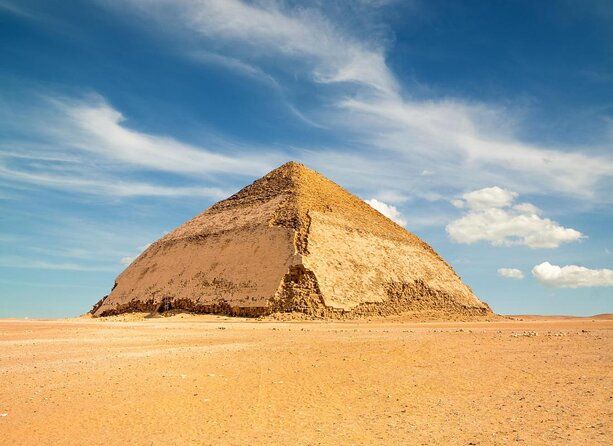
Among Dahshour’s wonders, the Bent Pyramid stands out as a marvel of ancient engineering. Rising elegantly from the desert, its lower half climbs at a steep 54-degree angle before abruptly changing to 43 degrees, giving it its unique silhouette. The internal chambers, corridors, and polished Tura limestone casing remain remarkably intact, offering insights into early pyramid construction techniques. Archaeologists continue to debate why the pyramid’s angle was changed—some suggest structural instability, while others believe it was a symbolic decision reflecting spiritual beliefs.
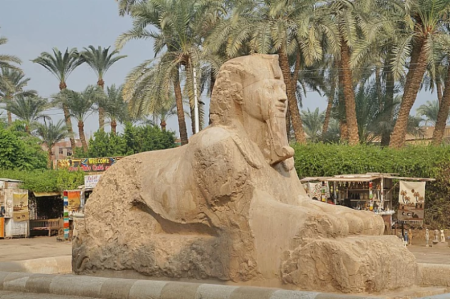
Visitors often describe the Bent Pyramid as eerily beautiful, a testimony to human resilience and creativity. It’s one of the few pyramids that still retains much of its original outer casing, allowing travelers to imagine how Egypt’s ancient skyline once shimmered under the desert sun. Those exploring Dahshour after visiting the The Valley Temple or the Sphinx Statue often find Dahshour refreshingly tranquil, an untouched echo of history’s grandeur.
The Red Pyramid: The Birth of Perfection
After learning from the Bent Pyramid’s miscalculations, Sneferu’s architects constructed the Red Pyramid—Egypt’s first successful smooth-sided pyramid. Its reddish limestone hue inspired its modern name, but ancient builders called it “Sneferu Shines.” Standing at 104 meters, it once gleamed with white casing stones that caught the sun’s rays like a celestial beacon. The Red Pyramid became a prototype for the Giza pyramids and cemented Sneferu’s legacy as the most innovative builder in Egyptian history.
Inside, the pyramid’s three chambers remain accessible, revealing remarkable precision and symmetry. The corbelled ceilings and perfect alignment to true north display an understanding of mathematics and astronomy that continues to astonish scholars today. For modern explorers including Dahshour in their Cairo Day Tours, descending into the Red Pyramid’s heart feels like stepping into the mind of ancient genius.
The Black Pyramid: A Cautionary Tale of Ambition
Centuries after Sneferu’s reign, Pharaoh Amenemhat III of the Middle Kingdom attempted his own pyramid at Dahshour. Known today as the Black Pyramid due to its dark mudbrick core, it ultimately suffered structural failure. However, its significance lies in its intricate internal architecture, including elaborate burial chambers and corridors. This pyramid demonstrates how Dahshour continued to inspire royal burials long after the Old Kingdom faded. Its ruins remind us that ambition and humility often coexisted in Egypt’s quest for immortality.
Dahshour’s Role in Ancient Egyptian Religion and Symbolism
Dahshour wasn’t just a construction site—it was a spiritual landscape where architecture and theology intertwined. The pyramid shape symbolized the primordial mound from which life emerged, pointing toward the sun god Ra’s rebirth cycle. Sneferu’s pyramids aligned perfectly with cardinal directions, embodying cosmic order, or “Maat.” Through these structures, the pharaoh sought eternal unity with the divine forces governing the universe. Standing within Dahshour’s sands today, one can still feel that cosmic resonance—an invisible connection between earth, sky, and spirit.
Modern Discoveries and Archaeological Insights at Dahshour
Recent excavations have revealed hidden treasures around Dahshour, including tombs of royal family members, wooden coffins, and funerary artifacts. Archaeologists have also uncovered remains of workers’ villages, providing glimpses into the daily lives of those who built these colossal monuments. These findings reshape our understanding of Egyptian society, illustrating how religion, science, and labor harmonized to achieve greatness.
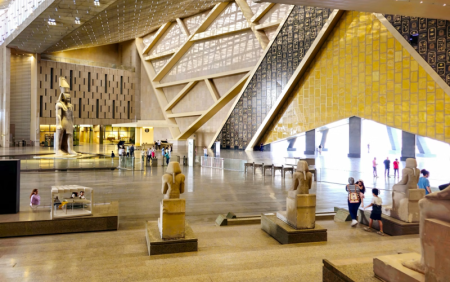
As Egypt continues unveiling new archaeological finds, Dahshour reemerges as a focal point of discovery and wonder. Visitors passionate about historical exploration often complement their Dahshour experience with visits to The Grand Egyptian Museum or the Egyptian Museum of Cairo to see artifacts from the same era up close.
Planning a Visit to Dahshour: What Travelers Should Know
Dahshour lies about 40 kilometers south of Cairo, making it an easy half-day trip from the capital. The site remains less crowded than Giza, allowing visitors to enjoy uninterrupted views and peaceful exploration. Temperatures can soar, so early morning or late afternoon visits are ideal. Comfortable shoes, water, and sun protection are essential for exploring the desert terrain. Many local experts recommend pairing Dahshour trips with Egypt Nile Cruises or broader Egypt Vacations Packages to experience Egypt’s diverse treasures in one itinerary.
For those chasing the authentic pulse of ancient Egypt, Dahshour offers a tranquil and deeply spiritual escape. It’s a place where the whispers of the past still echo, where monumental ambition meets serene desert silence. Watching the sunset over Sneferu’s pyramids paints a timeless picture—Egypt’s eternal dialogue between man and the divine.
Frequently Asked Questions About Dahshour
1. What makes Dahshour different from Giza or Sakkara?
Dahshour represents a crucial experimental stage in pyramid evolution. Unlike the step pyramids of Sakkara or the perfected ones at Giza, Dahshour’s monuments show the transition from early designs to true geometric precision. It’s quieter, less touristic, and offers visitors a raw, authentic glimpse into the birth of pyramid architecture.
2. How old are the pyramids at Dahshour?
The Bent and Red Pyramids date back to around 2600 BCE, during Pharaoh Sneferu’s reign in the Fourth Dynasty. That makes them among Egypt’s oldest surviving pyramids and key predecessors to the Giza complex.
3. Can visitors enter the pyramids at Dahshour?
Yes, travelers can enter both the Bent and Red Pyramids. The Red Pyramid’s interior is particularly accessible, with a long descending passage leading to its chambers. Inside, visitors experience the quiet majesty of ancient craftsmanship firsthand.
4. Is Dahshour suitable for family or group tours?
Absolutely. Its open spaces and relative calm make it ideal for families, photographers, and history enthusiasts. Many tour operators include Dahshour in their itineraries for those seeking a deeper, less commercialized experience of ancient Egypt.
5. What’s the best way to reach Dahshour from Cairo?
The easiest route is by private car, taxi, or as part of organized Egypt Excursions. The drive typically takes about an hour. Combining Dahshour with nearby Sakkara and Memphis creates a comprehensive day trip through Egypt’s earliest dynastic history.





Our Partners
Our Awesome Partners