

Temple of Horus
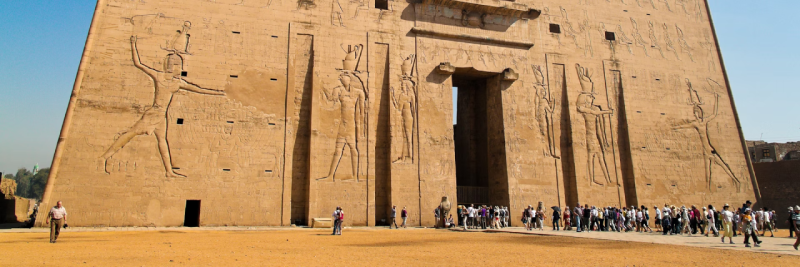
Temple of Horus at Edfu – The Best-Preserved Ancient Egyptian Sanctuary of the Sky God
The Temple of Horus at Edfu stands as one of Egypt’s most impressive and best-preserved monuments, a magnificent example of Ptolemaic architecture dedicated to Horus, the falcon-headed god of the sky and divine protector of the pharaohs. Situated on the west bank of the Nile between Luxor and Aswan, this iconic site embodies the grandeur, religious devotion, and remarkable craftsmanship that defined ancient Egyptian civilization. Constructed over 180 years, from 237 BC to 57 BC, the temple’s sheer scale and exquisite carvings reveal not just a place of worship but a monumental symbol of cosmic order and divine kingship.
Stepping into the Temple of Horus, visitors are instantly transported back in time, surrounded by towering pylons, hieroglyphic-covered walls, and mythological scenes depicting the eternal struggle between Horus and Seth, the god of chaos. This temple was more than a house of gods—it was a stage for sacred festivals, rituals, and royal ceremonies that reaffirmed Egypt’s spiritual harmony. Today, travelers exploring this majestic site often include it in their Egypt Nile Cruises, as it remains a major highlight of the route between Luxor and Aswan.
Beyond its architectural splendor, the Temple of Horus holds immense historical and cultural significance. It represents a fusion of ancient Egyptian traditions and Hellenistic influence during the Ptolemaic dynasty, preserving religious practices that endured for millennia. For modern explorers, it’s an awe-inspiring destination that unravels Egypt’s timeless narrative of faith, artistry, and cosmic order. Whether viewed under the golden hues of sunrise or the soft glow of dusk, the Temple of Horus continues to captivate those seeking to uncover the mysteries of ancient Egypt’s sacred past.
The Historical Significance of the Temple of Horus at Edfu
The Temple of Horus at Edfu was built on the site of an earlier sanctuary dating back to the New Kingdom. Its construction began under Ptolemy III Euergetes I and was completed under Ptolemy XII Neos Dionysos. The temple was dedicated to Horus of Behdet, symbolizing victory, protection, and the divine kingship of Egypt’s rulers. The inscriptions within its walls are among the most detailed sources of information about ancient religious rituals, offering scholars valuable insights into the Ptolemaic interpretation of traditional Egyptian mythology.
According to legend, the temple commemorates the epic battle between Horus and his uncle Seth, a story that represents the eternal conflict between good and evil. The victory of Horus over Seth reaffirmed the rightful order of the cosmos, known as Ma’at. This myth was reenacted annually during the sacred festival celebrated at Edfu, a grand event that attracted priests, locals, and travelers from across the Nile Valley. Today, this rich mythology continues to draw those fascinated by the legend of Osiris and Isis and the eternal symbolism of the gods.
Architectural Marvel: Design and Construction of the Temple of Horus
The Temple of Horus is a masterpiece of ancient Egyptian architecture, remarkable for both its preservation and grandeur. The temple’s layout follows the traditional structure of Egyptian sanctuaries, with a massive entrance pylon leading to an open courtyard, followed by hypostyle halls, and ending with the inner sanctuary where the statue of Horus was once venerated. The sandstone walls, rising nearly 37 meters high, are decorated with intricate reliefs depicting scenes of royal offerings, battles, and ceremonial processions.
The monumental entrance pylon, flanked by twin towers, stands 36 meters tall and is adorned with colossal carvings of Horus striking down his enemies. The courtyard beyond features 32 columns, each elaborately engraved with hieroglyphs and depictions of divine rituals. The structure’s symmetry and alignment with celestial patterns reflect the Egyptians’ mastery of sacred geometry and astronomy. Visitors traveling through Egypt Travel Packages often marvel at how this temple remains almost intact despite over two millennia of exposure to the elements.
Sacred Inscriptions and Mythological Symbolism
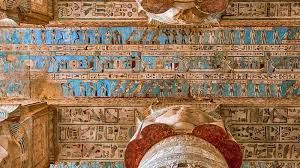
The walls of the Temple of Horus serve as a vast stone library of sacred knowledge. Every surface is filled with reliefs and hieroglyphics narrating divine battles, offerings, and celestial ceremonies. Among these depictions, the famous “Sacred Drama of Horus and Seth” stands out—a ritual reenactment that symbolized the triumph of light over darkness. The inscriptions also detail the temple’s foundation rituals, offerings made to the gods, and the daily liturgies performed by priests.
These engravings are a testament to the Egyptians’ deep devotion and their belief in maintaining cosmic harmony through ritual. They also offer historians a rare glimpse into the religious continuity between the Pharaonic and Ptolemaic eras. Similar symbolic carvings can be found at other sacred sites like Temple of Philae and Karnak Temple, but Edfu’s inscriptions are exceptionally well-preserved and vividly detailed.
The Spiritual Role of the Temple in Ancient Egyptian Religion
In ancient Egypt, temples weren’t just places of worship—they were centers of power, economy, and education. The Temple of Horus at Edfu functioned as a spiritual hub where priests performed daily rituals to maintain balance between gods and humans. Offerings of incense, food, and sacred chants were made to honor Horus, ensuring prosperity and protection for the region. The temple also stored sacred texts, treasures, and offerings, serving as a repository of Egypt’s spiritual wealth.
Beyond its religious significance, the temple played a vital social role, providing employment and sustaining the local economy. The annual festival of Horus brought merchants, artisans, and pilgrims, transforming Edfu into a bustling center of devotion. Those exploring Egypt Vacations Packages can still witness remnants of this historical vibrancy in the modern town surrounding the temple.
Exploring the Temple of Horus Today: A Journey Through Time
Standing in the heart of Edfu, visitors can walk through corridors once traversed by pharaohs and priests. The temple’s dark inner chambers and vast courtyards evoke a sense of mystery and reverence. Modern travelers often include the site in their Egypt Excursions, particularly those cruising between Luxor and Aswan. The temple’s proximity to other monumental attractions such as Kom Ombo Temple and Abu Simbel Temples makes it an unmissable stop for any Egypt itinerary.
At sunrise, the temple glows in golden hues, revealing the majesty of its carvings and the precision of Ptolemaic architecture. The colossal statues of Horus, carved in black granite, stand guard at the entrance, symbolizing eternal protection. Many visitors are struck by how the temple has survived almost untouched—a rare continuity in Egypt’s five-thousand-year history. Its preservation allows modern archaeologists and travelers to experience the living spirit of ancient Egyptian worship.
How the Temple of Horus Reflects Ptolemaic Influence
While deeply rooted in Egyptian tradition, the Temple of Horus also reflects the Greek-inspired style of the Ptolemaic dynasty. The Ptolemies sought to legitimize their rule by embracing Egypt’s religious customs, blending Hellenistic and native architectural elements. This fusion is evident in the temple’s elaborate reliefs, harmonious proportions, and symbolic ornamentation. It was a political and spiritual statement—an assertion of continuity with Egypt’s divine heritage.
This cultural synthesis ensured that the cult of Horus thrived even under foreign rulers. The temple’s grandeur conveyed both religious devotion and dynastic power, echoing the same divine connection seen in other monumental edifices like the Luxor Temple. Today, this blend of cultures makes the Temple of Horus a treasure trove of artistic and historical insight.
Travel Tips for Visiting the Temple of Horus
Visiting the Temple of Horus is an unforgettable experience for any history enthusiast. The best time to explore is during the cooler months between October and April, when the weather is pleasant. Most travelers reach Edfu as part of a cruise along the Nile River, allowing for scenic views of rural Egypt along the way. Guided tours often provide deeper insights into the temple’s mythology and architecture, making the visit even more enriching.
Photography enthusiasts should visit early in the morning when the light enhances the reliefs’ depth and texture. Comfortable clothing, water, and a hat are essential, as the site can become quite warm during midday. The surrounding town of Edfu offers a glimpse of authentic Upper Egyptian life, combining ancient heritage with local charm. Travelers planning a historical journey through Egypt can combine this visit with destinations such as The Valley of the Kings and Temple of Hatshepsut.
FAQs About the Temple of Horus
What makes the Temple of Horus unique among ancient Egyptian temples?
The Temple of Horus at Edfu stands out as Egypt’s most complete and best-preserved temple. Unlike other ancient sites, it was buried under sand for centuries, which shielded it from erosion. Its inscriptions, statues, and structure remain remarkably intact, offering an authentic glimpse into Ptolemaic-era religious life.
When was the Temple of Horus built?
Construction began in 237 BC during the reign of Ptolemy III Euergetes I and was finished around 57 BC under Ptolemy XII. Despite spanning nearly two centuries, the temple’s architectural consistency reflects the Ptolemaic commitment to preserving Egypt’s ancient traditions.
Who was Horus, and why was he so important to the Egyptians?
Horus was the falcon-headed god representing the sky, kingship, and protection. As the son of Osiris and Isis, his battle against Seth symbolized the triumph of good over evil. Pharaohs considered themselves earthly manifestations of Horus, linking divine authority directly to their rule.
How can visitors reach the Temple of Horus?
The temple is located in Edfu, midway between Luxor and Aswan. Most visitors arrive via Nile cruise or private tour. It’s a key highlight in many Egypt Luxury Tours and cruise itineraries, offering travelers a perfect stop along the river’s route through Upper Egypt.
Is the Temple of Horus still used for religious purposes today?
While the temple no longer functions as an active religious site, it remains a deeply spiritual symbol and a major archaeological treasure. Visitors often describe a palpable energy within its walls—a lingering connection to the divine essence that once filled the sanctuary of Horus.
The Temple of Horus at Edfu continues to shine as a beacon of ancient wisdom, artistry, and spiritual devotion. Its enduring majesty reminds us that Egypt’s legacy isn’t just in its monuments but in the timeless stories carved into stone—stories that still whisper through the corridors of eternity.









Our Partners
Our Awesome Partners