

black and white desert egypt
Black and White Desert Egypt: A Mesmerizing Journey Through Egypt’s Dual-Toned Wilderness
In the heart of Egypt’s Western Desert, a surreal world unfolds — where time pauses, silence deepens, and nature paints with the most contrasting palette imaginable. The Black and White Desert of Egypt isn’t merely a destination; it’s a profound experience that feels almost otherworldly. Imagine a land where black volcanic hills rise dramatically from a sea of white chalk formations, sculpted by millennia of wind erosion. This mesmerizing landscape, located near the Bahariya Oasis and Farafra Oasis, offers travelers both a geological marvel and a spiritual retreat. The stark contrast between the two deserts — one dark and volcanic, the other pale and ghostlike — makes this region one of Egypt’s most photogenic and mysterious natural wonders.
Visitors often embark on specially curated Egypt Desert Tours to explore this extraordinary area, venturing deep into its hidden valleys and wind-carved formations. The Black Desert’s volcanic mounds shimmer under the sun’s golden glow, while the White Desert glows under moonlight, creating a natural theater of light and shadow. It’s easy to see why this desert duo has become a must-see for adventure seekers, photographers, and anyone craving a truly off-the-beaten-path escape in Egypt. The feeling of standing amidst the surreal limestone formations, with nothing but silence and sand, is both humbling and exhilarating — an encounter that etches itself into memory forever.
The Geological Origins of the Black and White Desert
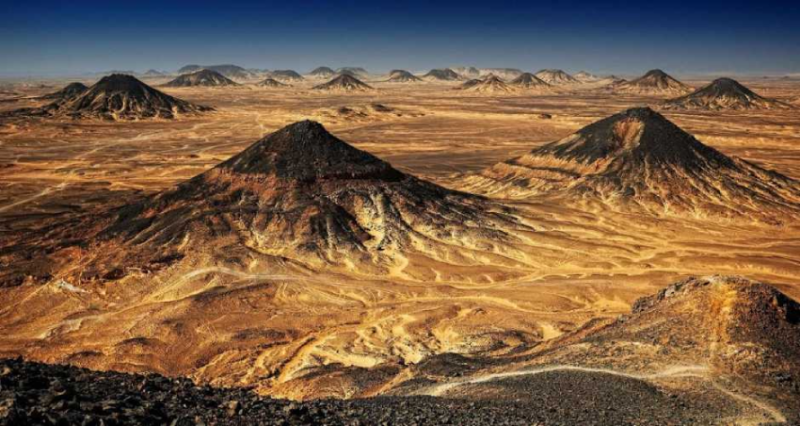
The Black and White Desert in Egypt offers a fascinating window into Earth’s ancient past. The Black Desert lies just south of Bahariya Oasis — a treasure trove of volcanic hills capped with dark basalt stones, remnants of prehistoric volcanic activity. Over time, erosion exposed the blackened peaks that now gleam mysteriously against the desert’s golden sands. These hills, scattered across a vast plain, give the landscape a lunar appearance — a striking contrast to the neighboring White Desert.
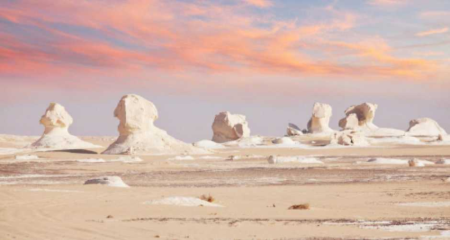
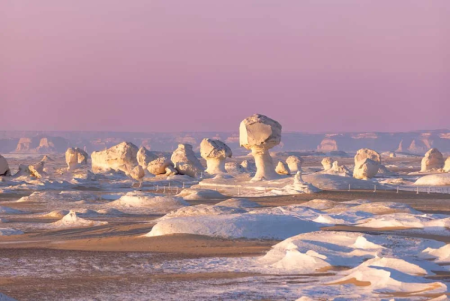
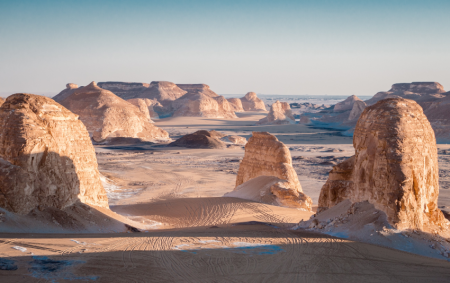
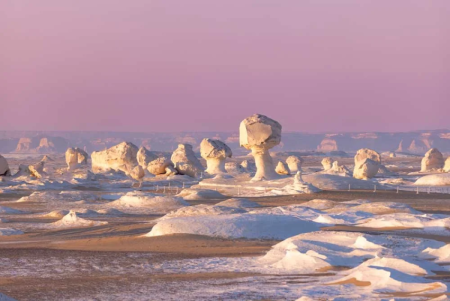
Just a short drive away, the White Desert emerges like a dream. Formed primarily of white chalk and limestone, it owes its ghostly hue to the ocean that once covered this region millions of years ago. As the sea retreated, sedimentary layers were left behind, hardened, and later sculpted by relentless desert winds into surreal shapes — mushrooms, waves, and even animal-like figures. The most iconic formation, known as the “Chicken and Mushroom,” epitomizes the White Desert’s natural artistry. Together, these twin deserts tell a story that spans geological epochs, preserving Egypt’s prehistoric beauty in stone and sand.
Exploring Bahariya Oasis and Gateway to Desert Wonders
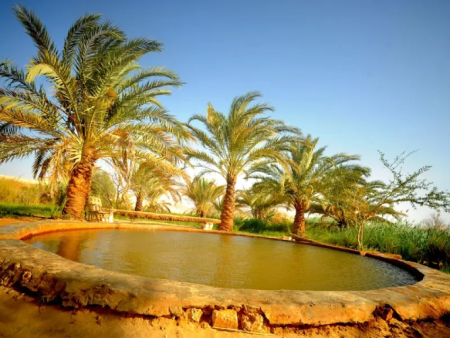
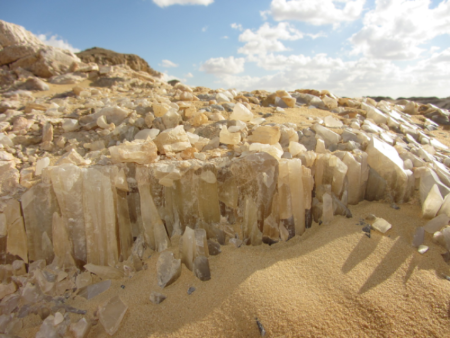
Every journey through the Black and White Desert begins at Bahariya Oasis Egypt, a green refuge in the heart of the Western Desert. This lush settlement, once a vital trading post, is surrounded by palm groves, hot springs, and ancient archaeological sites. From here, 4x4 expeditions set off toward the otherworldly landscapes of the Black Desert and beyond. Travelers often pause at the Crystal Mountain, a dazzling outcrop along the route, where quartz crystals glimmer under the desert sun — nature’s own art gallery in stone.
Bahariya is also home to the famous Valley of the Golden Mummies, an archaeological wonder that revealed hundreds of beautifully gilded Roman-era mummies. It’s a reminder that even in the harshest environments, civilizations thrived. The oasis thus serves not only as a starting point for desert adventures but also as a living museum of Egypt’s timeless history. Many Egypt Vacations Packages now combine cultural exploration with desert escapades, blending comfort with unparalleled natural beauty.
The White Desert National Park: Egypt’s Natural Sculpture Garden
Within the vast expanse of the Farafra Depression lies the White Desert National Park Egypt. Declared a protected area in 2002, this national treasure spans more than 3,000 square kilometers. It’s here that travelers encounter the ethereal chalk formations that seem to defy gravity. Some rise like colossal mushrooms, others resemble camels, sphinxes, or giant icebergs frozen in time. Every sunrise and sunset transforms this alien landscape into an ever-changing canvas of light — from soft amber to glowing ivory — perfect for photography or meditation.
Camping under the starlit sky of the White Desert is an experience unlike any other. As night falls, the desert glows under the moon’s silver light, and the silence feels almost sacred. Bedouin guides brew sweet mint tea and share stories of the desert’s spirits and legends. For many adventurers, this serenity becomes the highlight of their entire Egyptian journey. Several Egypt Excursions include overnight camps here, offering visitors a rare glimpse into Egypt’s nocturnal desert life.
The Black Desert: A Volcanic Masterpiece in Motion
After the dazzling whiteness of Farafra, the Black Desert offers a striking contrast. Its dark, cinder-covered hills are remnants of ancient volcanic eruptions that blanketed the region with basalt millions of years ago. Driving across the Black Desert feels like traversing the surface of another planet. The ground glitters with volcanic pebbles, and occasional sand dunes soften the severe terrain. Climbers often ascend English Mountain, one of the highest volcanic cones, to catch panoramic views of this dramatic landscape.
What makes the Black Desert particularly fascinating is the way it transforms under different lighting conditions. At dawn, the hills glow russet and amber; by mid-afternoon, they shimmer with obsidian tones. This region, though stark and uninhabited, carries a haunting beauty that lingers in memory. Many Egypt Luxury Tours offer private excursions here with expert geologists, ensuring visitors grasp the extraordinary forces that shaped this terrain.
Adventure and Activities in the Black and White Desert
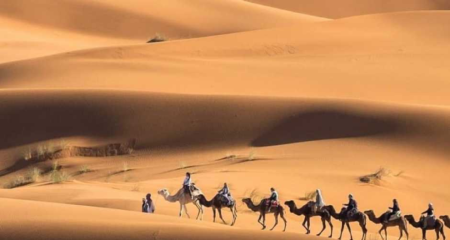
Beyond sightseeing, the Black and White Desert Egypt invites adventure lovers to immerse themselves in its raw wilderness. Sandboarding across dunes, trekking through chalk valleys, or stargazing under one of the clearest skies on Earth — the desert offers endless thrills. Jeep safaris navigate the rugged terrain, while camel rides evoke an ancient rhythm of travel. Photographers find inspiration in every curve of rock and shadow, capturing the desert’s shifting moods hour by hour.
Nearby attractions like the Crystal Mountain and Valley of Agabat further enrich the journey. Agabat, in particular, enchants travelers with its golden dunes and surreal limestone peaks that rise dramatically from the sand. It’s a landscape so breathtaking that many travelers describe it as “Egypt’s hidden paradise.” This combination of black volcanic elegance, white ethereal formations, and golden dunes makes the region an unmatched tri-color spectacle.
Best Time to Visit the Black and White Desert Egypt
Timing is everything when exploring Egypt’s deserts. The best months to visit the Black and White Desert are from October to April, when temperatures are mild, and the skies radiate clarity. During the summer months, daytime heat can soar above 40°C, making exploration challenging. Winter nights, though chilly, are ideal for camping, with starlit skies offering an unforgettable celestial show. Pairing a desert adventure with a visit to Egypt Travel Packages that include nearby oases ensures both comfort and authenticity.
Visitors often combine their journey with a stop in Cairo City, just a few hours’ drive away, to explore landmarks like the Great Pyramids of Giza before heading west into the desert. This contrast — from the grandeur of ancient monuments to the quiet of the endless sands — embodies the essence of Egypt’s diverse beauty.
Conservation and Sustainable Tourism in Egypt’s Deserts
The growing popularity of the Black and White Desert has prompted increased conservation efforts. As part of the White Desert National Park, preservation of geological formations and wildlife is paramount. Local Bedouin communities play a vital role in maintaining ecological balance, guiding visitors responsibly, and preserving traditional knowledge. Sustainable travel initiatives encourage minimal-impact camping, waste management, and respect for the fragile desert ecosystem.
Eco-conscious travelers often book eco tours in Egypt that promote responsible exploration. This approach ensures the desert remains pristine for generations to come — a timeless sanctuary untouched by modern intrusions. Supporting local guides and artisans also contributes to the region’s economic growth, blending adventure with cultural empathy.
FAQs About Black and White Desert Egypt
1. Where is the Black and White Desert located?
The Black and White Desert lies in Egypt’s Western Desert, between the Bahariya and Farafra Oases. It’s approximately 370 km southwest of Cairo and is easily accessible via 4x4 tours from Bahariya Oasis. The region forms part of the larger Sahara landscape, offering some of the most dramatic and photogenic scenery in Egypt.
2. What makes the Black and White Desert unique?
The contrast between black volcanic hills and white chalk formations creates a visual spectacle found nowhere else on Earth. The Black Desert features basalt-capped hills from ancient volcanic activity, while the White Desert showcases wind-sculpted limestone shapes resembling animals and mushrooms. Together, they represent two geological stories told side by side.
3. How can travelers visit the Black and White Desert?
Most visitors join organized desert safaris departing from Bahariya Oasis. These tours include transportation, camping equipment, meals, and expert guides familiar with local routes. It’s advisable to book through reputable operators specializing in desert travel or through trusted Egypt travel booking tips resources to ensure safety and sustainability.
4. Is it safe to camp in the White Desert?
Yes, camping in the White Desert is generally safe when done with licensed guides. The area is a protected national park, and Bedouin-led camps prioritize safety and ecological preservation. Desert nights can be cold, so warm clothing, proper gear, and sufficient water are essential for a comfortable experience.
5. What other attractions can be combined with a desert visit?
Travelers often combine their Black and White Desert adventure with visits to Fayoum City, Siwa Oasis, and Great Sand Sea, creating a comprehensive desert circuit. These destinations showcase Egypt’s diverse desert environments — from crystalline mountains to lush oases — offering a panoramic view of the country’s natural and cultural richness.
Our Partners
Our Awesome Partners